design systems + ai workflows
Building reusable foundations for humans—and exploring what happens when AI designs within them.
Description
What started as a personal goal to deepen my understanding of modern design systems became a working foundation for my client projects—and eventually an experiment in how those same systems could provide structure for AI-assisted design.
I built the system to reduce repeated decisions, improve consistency, and create a stronger starting point for each project. More importantly, using it in real work taught me when a comprehensive system adds value, when it becomes unnecessary overhead, and how reusable foundations can support both human designers and AI collaborators.
Work Produced
Design System Architecture | Design Tokens | Component Libraries | Documentation | AI-Assisted Prototyping
Tools
Figma | Figma Variables | Claude | Figma MCP | Figma Agent
Building the Foundation
Working across a high volume of client projects, I kept encountering the same problem: every new project required rebuilding many of the same foundational decisions. I also wanted to better understand contemporary design-system architecture—not just how to use a library, but how to build one thoughtfully from the ground up.
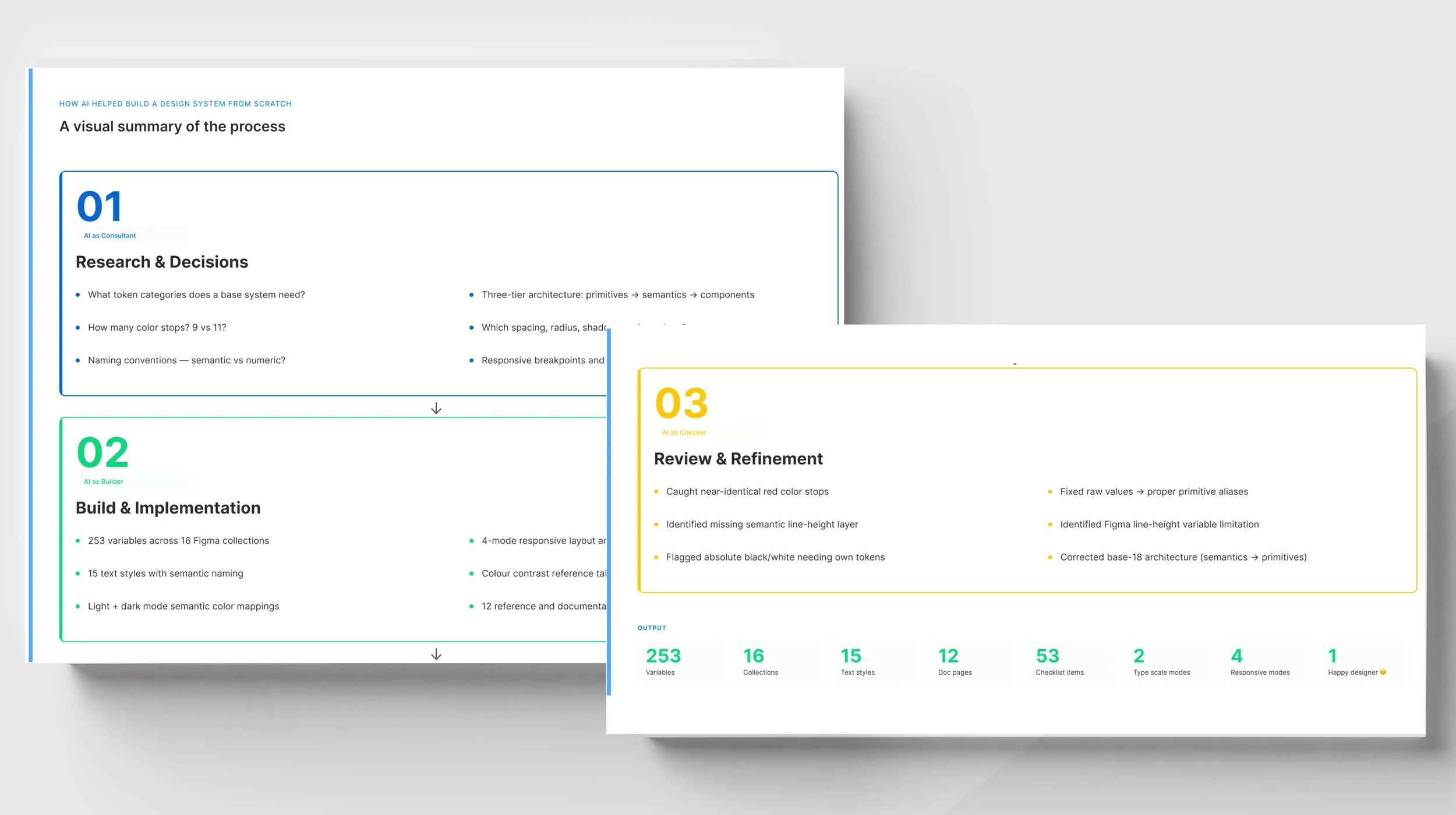
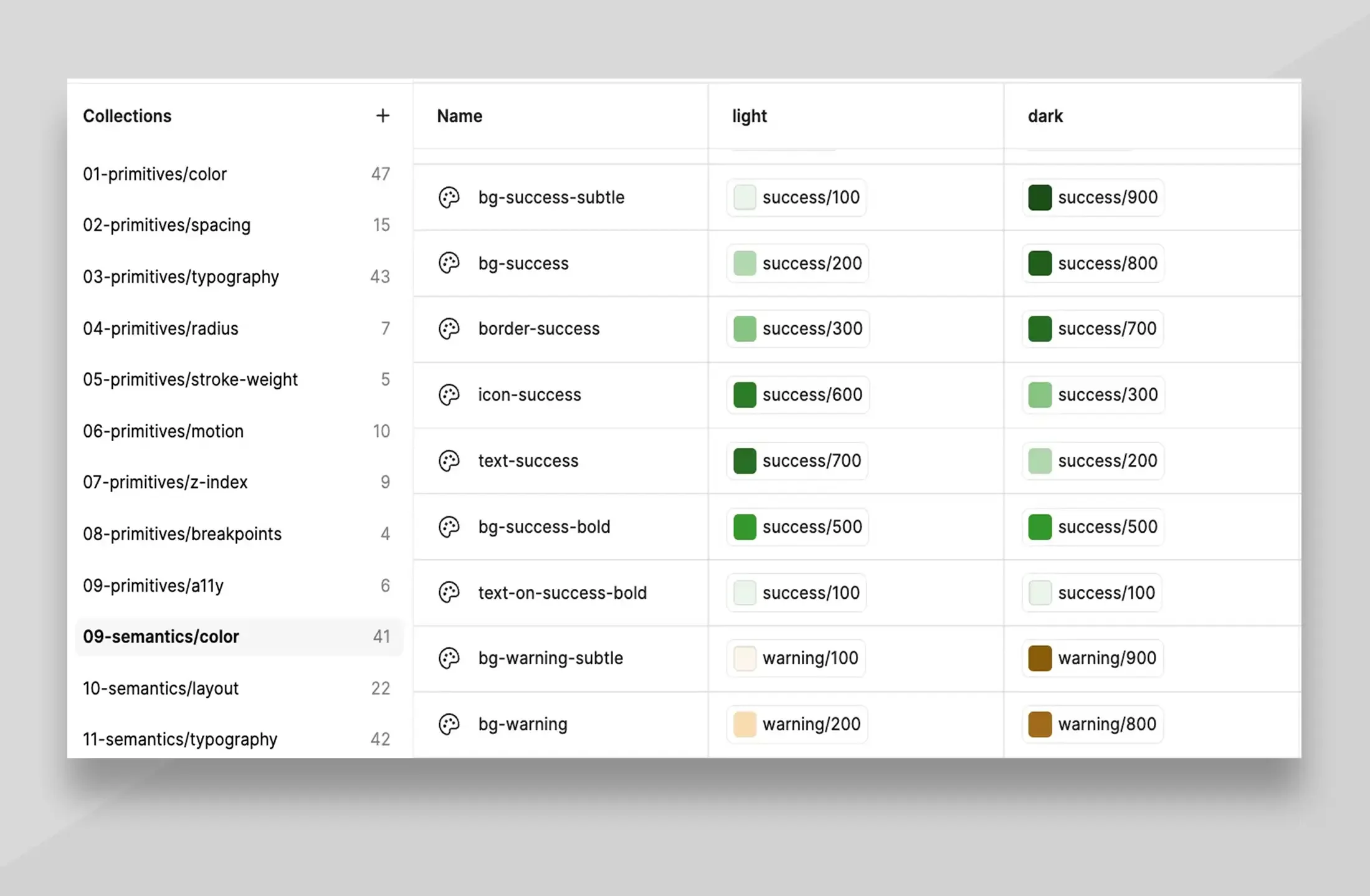
I created a three-tier token architecture spanning primitives, semantics, and components, along with responsive typography, accessibility considerations, reusable components, and brand modes. The goal was to create a flexible foundation that could adapt to different clients without reinventing the system each time.
Build, Test, Simplify
My first version was comprehensive. Too comprehensive…
Once I began using it on real projects—and, importantly, reviewing it with the developers who would receive my work—I learned that theoretical completeness wasn't the same as practical usefulness.
The developers valued the consistency and clearer design decisions, but a small, collaborative team didn't need every layer of infrastructure I had created. I simplified the foundation and eventually developed fit-for-purpose versions: a larger system for website work and a much leaner one for highly templated forms.
The goal shifted from building the most complete system I could to building only as much system as the work actually needed.
Giving AI Better Context
As I began experimenting more deeply with AI-assisted design, the system took on another role: context.
Rather than asking an agent to create an interface from an unconstrained prompt, I could connect an established library and ask it to work within decisions I had already made about typography, components, spacing, accessibility, and visual language.
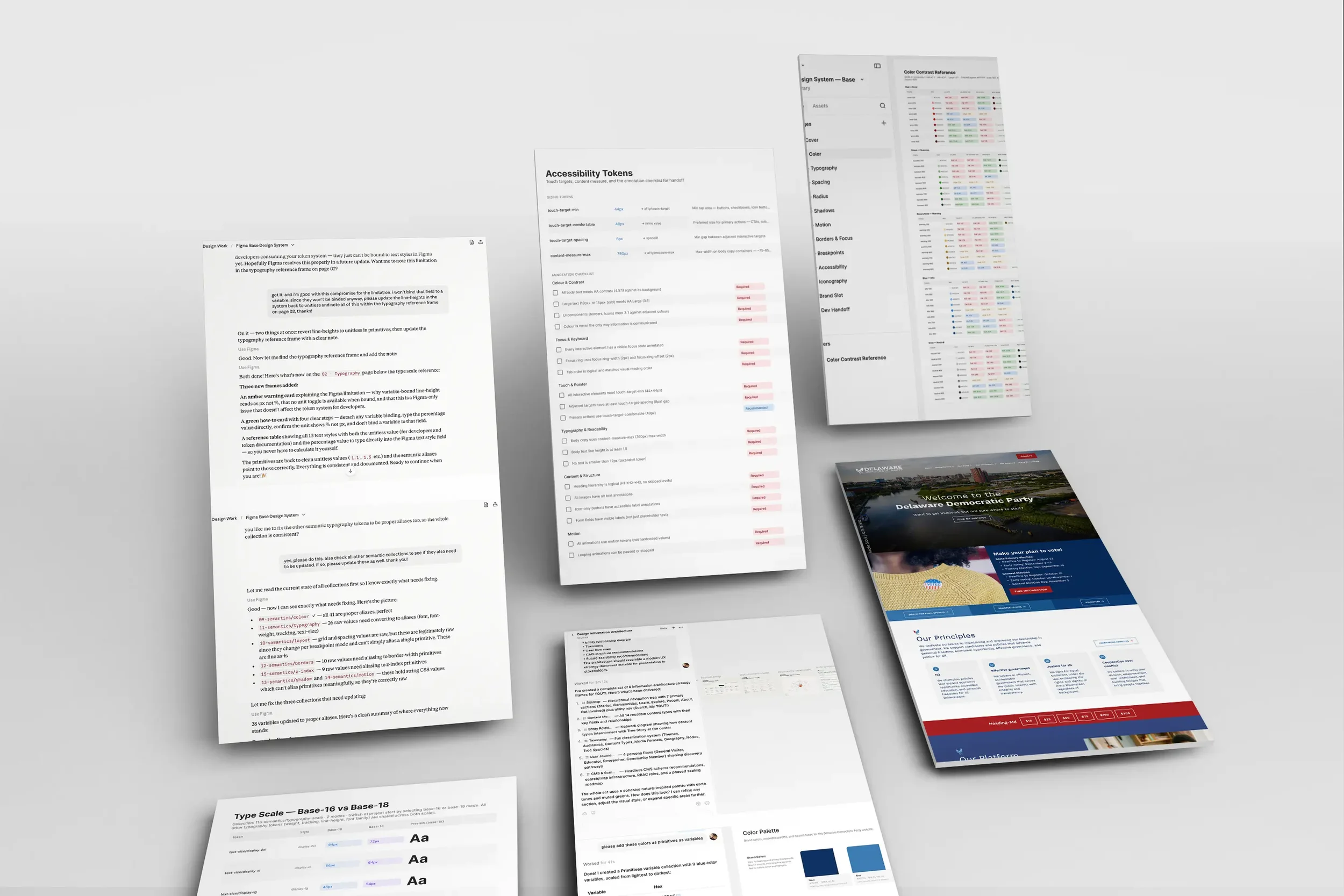
On a recent project, I combined meeting summaries with my own notes to develop an initial information architecture and user journeys with AI, then connected my simplified design-system library and used Figma Agent to generate early interface directions. The results still required critique and refinement, but the system gave the agent a much stronger—and much more intentional—place to start.
The design system became more than a consistency tool for myself. It became context for an AI collaborator.
One more experiment: can I teach AI how to critique me?
Working as a sole designer also means I don't have another designer beside me for regular critique. I wanted to explore whether AI could fill part of that gap—not by making design decisions for me, but by asking better questions and pushing me beyond my first solution.
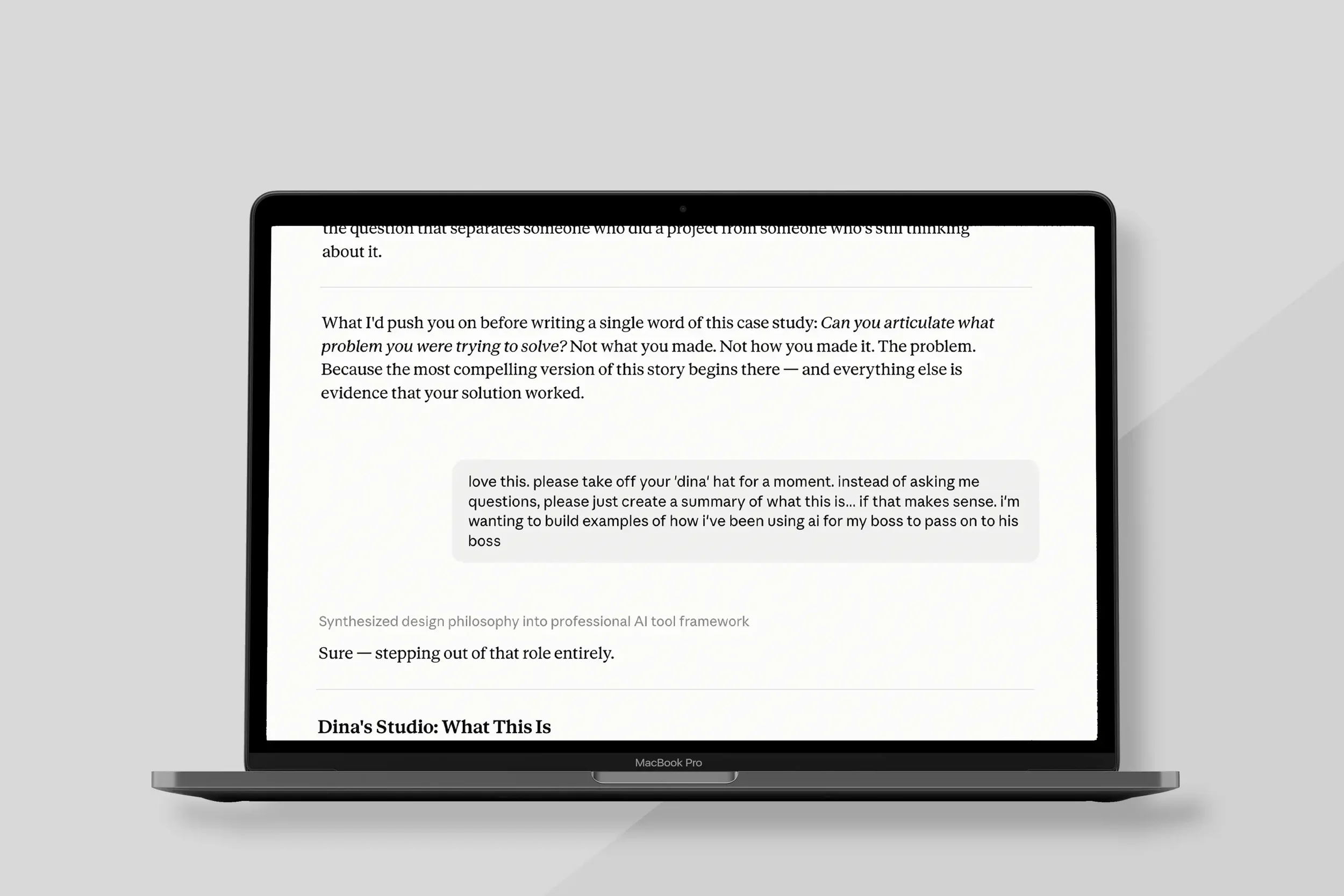
I created Dina, a custom AI critique partner modeled around the feedback style of a former design professor. I gave her structured context, behavioral rules, critique frameworks, and project knowledge designed to make her question assumptions, probe design rationale, and keep user and client needs at the center of the conversation.
The experiment also taught me where AI critique can go wrong: Dina once helped me explore a project so deeply that I spent considerably more time developing conceptual directions... only for the client to prefer the original concept… It was a useful reminder that more exploration isn't automatically better exploration, and that AI still needs human judgment about when to stop.